Host 1
Welcome to the Two on One podcast. I’m František, and sitting next to me is Honza. On this show, we invite inspiring Newton University students who’ve made things happen and have valuable insights to share.
Host 2
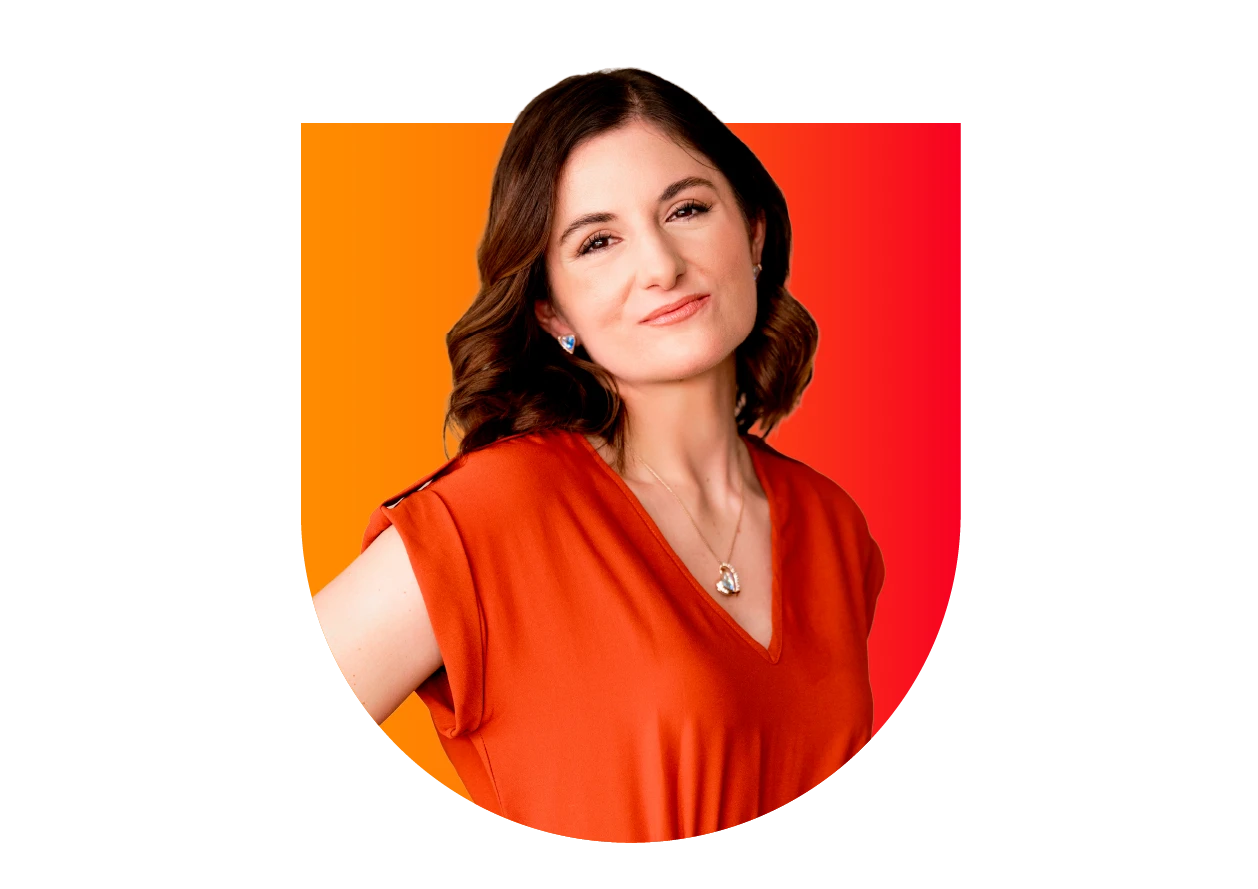
And our guest today is Anežka Vaňková—a young and talented author.
Host 1
Anežka is a student at Newton University, but she’s also the author of the novel Heartbreaker (Lamačka srdcí). Anežka proves that you can turn dreams into reality and create something with genuine impact even at a young age. Anežka, welcome!
Anežka
Hi guys, thanks so much for having me, František. It’s great to be here with you.
Host 1
Thanks for coming! First question, Anežka: have you always loved writing? And when did you realize that writing is something that truly fulfills you?
Anežka
Written expression came naturally to me early on. I always got straight A's on school essays, and I genuinely enjoyed writing them. I was a really chatty kid, and people didn't always have the patience to listen to me babble. So keeping diaries, jotting down notes, and making up stories became my outlet to express myself without bothering anyone or needing a captive audience. I never went back and reread them, though. I must have gone through fifteen journals, never finished a single one, and they all vanished over time. It wasn't very structured, and it never crossed my mind back then that it would lead to a published book. As for being an author... honestly, I’ve only held that title for a short while, and I haven't settled into it yet. I hesitate to call myself an "author" because I feel like I'm running a marathon and I'm still at the starting line. I'm a complete newcomer, so I don't feel established enough to make it my whole identity.
Host 1
Speaking of those fifteen childhood journals, do you still have any of them tucked away somewhere?
Anežka
A few are probably lying around, but I strongly advise against anyone ever finding and reading them! I secretly hope they’ve been destroyed. Though, looking back to see what was going on in my ten-year-old brain would be a funny trip down memory lane.
Host 2
Let’s talk about your book, Heartbreaker. What’s the core story about? Judging by the title and cover, it leans toward women's fiction—or is there more to it?
Anežka
Naturally, the title and aesthetic appeal more to female readers. Being a female author writing from that perspective makes it instantly relatable to women. But whenever I talk about it, I make a point of defending the male lead so guys don't write it off. There's a male and female co-lead, and the guy is actually written very favorably—I gave him a lot of redeeming qualities. In contrast, I intentionally stripped away sympathy from the female protagonist. My editor actually told me that by the end of the manuscript, the female lead was driving her completely nuts and she grew to despise her! The male character comes across great, so male readers might actually find it flattering and enjoy it.
Host 2
So the male lead doesn’t carry too many red flags?
Anežka
No major red flags jump out. He’s a genuinely likable guy—I'm a big fan of his character.
Host 1
Is this your very first book, or your second?
Anežka
I had actually cobbled together a full-length manuscript before this one. It had a continuous plot, a beginning, and an ending. But back then, I had no clue how publishing worked or where to even begin with submitting a manuscript. It was a raw first attempt—frankly a bit of a rough draft in hindsight—so it stayed tucked in a drawer. The only person who ever read it was my grandmother. She knows everything about me anyway, so to her it was just like reading my personal diary; it was never meant for the public. After that, I thought: why not sit down and deliberately write something structured and polished from day one that could actually be published? Heartbreaker was written with that exact goal in mind. And I’m currently drafting my next book as we speak.
Host 1
That's awesome! Can you tease the working title, or is that still under wraps?
Anežka
I pulled the working title from an old journal entry I wrote during a rough patch in my life. It's still evolving, but the core working title is Or: We Say Goodbye at Dawn. I'm still deciding whether to keep it as a standalone phrase or add a subtitle, but that central theme—saying goodbye at dawn—anchors the whole book.
Host 1
What does your creative process look like? Where do you write—in coffee shops, at home? Do you need absolute silence, or do you have a pet by your side?
Anežka
Music is the absolute foundation for me. I build a dedicated playlist for every project. I had one for my unpublished manuscript, a custom playlist for Heartbreaker, and I have a dedicated one for the new book. I curate specific tracks and melodies that match the emotional weight of the scene I’m trying to put down on the page. It helps me step directly into the characters' shoes. I have an overactive imagination, so I live through every beat right alongside them. When I’m writing a scene, I want to feel those emotions raw in real time so the intensity bleeds onto the page. I can't write a single sentence without headphones. Aside from music, the muse has to hit, and I need complete solitude—mostly because I end up crying through emotional scenes!
Host 2
Does all your inspiration come purely from imagination, or do you draw heavily on real-world experiences?
Anežka
The number one question people ask about Heartbreaker is always: "Is this about you?" At first, I'd get defensive and say: "No, that wasn't the goal." A lot of my friends assumed the book was a decoding manual for my personal life—that they’d finally uncover the big secret of the "heartbreaker." Eventually, I just gave in and thought: "Sure, if you want to see it that way, go ahead—I'm the heartbreaker." The emotional core is inspired by real-life lessons, but the plot itself is entirely fictional. Every author injects their worldview into their writing. If you’re going through heartbreak, you aren't going to write a sugary fairytale where everyone lives happily ever after in a suburban house with a white picket fence. My writing is heavily shaped by my headspace and whatever emotional phase I’m navigating.
Host 1
So a piece of you is baked into the pages.
Anežka
Definitely. That’s why I hesitated so much about publishing it—it felt intensely vulnerable. When release day drew close, panic set in: "People are actually going to read this? What if my ex picks it up?" That was terrifying because the emotional blueprint felt so raw and personal.
Host 1
You mentioned your ex—is there a current partner in the picture?
Anežka
No current partner, and honestly, a future one isn't looking likely either! That’s a whole separate podcast topic. Modern dating is tricky. Heartbreaker touches on that dynamic—looking back at my past dating history, my side of things often felt emotionally unattached. That’s probably where the title comes from: the other person was usually far more invested than I was. I never led anyone on intentionally, but it made me question myself: was I the villain in those stories? I didn't set out to hurt anyone, but the disconnect was there.
Host 1
Sounds like your next book should be called The Impostor!
Host 2
Looking ahead with your writing, do you want to pursue this full-time as a career, or keep it strictly as a passion project?
Anežka
I'm still a big kid at heart when it comes to career paths—I want to do everything. I love singing, music, acting... my ultimate dream would be combining all of it. I'm not pushing forward aggressively on every front yet, which frustrates me sometimes. But publishing this book felt like opening the first door into the creative world that I love and want to be a part of.
Host 2
So your overarching goal is simply being a creator?
Anežka
I think so. Unless my current phase turns me into a total anti-social hermit! If this is just a temporary phase and I stay comfortable having my name out there on book covers, that would be amazing.
Host 1
How do you balance university coursework with writing novels? Do ideas for scenes ever pop into your head during lectures or seminars?
Anežka
Newton constantly pushes you to work on your craft and lean into challenges. That culture keeps my writing accountable. Whenever I hit a slump or get distracted, sitting in a practical seminar reminds me: "You have a project sitting there—why aren't you working on it? You have the tools, make the time." Newton acts as a great catalyst. It snaps me out of procrastination and reminds me that I have a half-finished manuscript waiting for me.
Host 1
Do you ever pull character inspiration from fellow students? Sitting at the back of the lecture hall observing people—do you ever test out personalities for your next book?
Anežka
All the time! Most characters are composites of real people—friends, family, or acquaintances. I couldn't invent a fully fleshed-out persona out of thin air. What's funny is that while writing Heartbreaker, the character arcs shifted based on how real-life people in my circle were behaving in real time. My writing is deeply tied to the people around me, even those I don't see daily. So people might definitely see shades of themselves on the page—which terrifies everyone around me!
Host 2
How long did it take you to write Heartbreaker? Did you enter a flow state and knock it out in a month, or was it a slow, fragmented process?
Anežka
Heartbreaker was written during the COVID lockdowns in 2022. I was going through an identity shift, and being stuck indoors gave me endless free time. Writing became a daily routine. But once lockdowns lifted, life sped up with school, graduation exams, and daily chaos, so the writing became very stop-and-start. I often had to go back and reread previous chapters just to remember where the narrative was heading and prevent the tone from veering off course. It was pieced together in stages, which isn't always ideal, but that was the reality for this book.
Host 1
Would you write it differently if you sat down today?
Anežka
Without a doubt. But writing isn't mechanical for me; I can open my laptop with every intention to write, and if the emotional frequency isn't there, nothing happens. I refuse to write filler just to hit a word count. I need to inhabit the exact emotional state of the scene. I’m not a veteran author who can churn out brilliant prose on command without breaking a sweat, so my process is slower.
Host 2
How did your family and close friends react? Were they encouraging you to finish it, or were they skeptical about putting so many personal themes out into the world?
Anežka
Everything came down to the wire. Once the manuscript was accepted, contract negotiations and legal paperwork started rolling in. I didn't understand the administrative side of publishing, so I needed my dad's help. During Sunday lunch, I casually dropped: "By the way, I wrote a book, it's getting published, and I need you to review the publishing contract." My dad nearly had a heart attack! Because I was stammering and beating around the bush, he thought I was about to announce I was pregnant. Once he realized what was happening, he became my biggest champion. He got completely invested in the whole process, asking questions every step of the way. He even politely asked if he was allowed to read it first, knowing it might contain themes parents don't necessarily want to read from their kids. My friends and extended network were amazing too. The book was funded through a crowdfunding campaign where readers pre-ordered copies. The turnout was overwhelming—even people I didn't think cared that much showed up to support it. That was heartwarming, though it also revealed a few people whose underlying jealousy surfaced. Envy exists, and navigating those social dynamics was eye-opening.
Host 2
Speaking of the publishing landscape—did the publisher impose any strict guidelines or quotas on themes you had to include, like identity representation?
Anežka
Not at all. I had complete creative freedom. In Heartbreaker, the protagonist’s best friend is gay. Toward the end, there’s a slightly cynical, satirical aside addressing the trope of whether he immediately finds a fairytale romance, adopts a child, and lives a complication-free life. My editor actually praised that ending specifically for its grounded realism. Nobody pressured me to add or remove anything.
Host 1
What can you tell us about the upcoming book? What’s the core premise?
Anežka
I'm actively trying not to write Heartbreaker 2.0 under a different coat of paint. The lead is a woman again, and I might even keep the same character name—not as a direct sequel, but almost like an archetype. This time, I want to make her significantly more human and vulnerable. Some readers and my editor pointed out that the lead in Heartbreaker felt almost too invincible and calculating at times, which made her hard to empathize with. In the new book, I want to lean into vulnerability, grief, and failure—stripping away that armor so readers can connect with her on a deeper emotional level.
Host 1
Would you ever love to see Heartbreaker adapted for the screen?
Anežka
That would be incredible—I think about it all the time! The only catch is that I’d probably need to direct and star in it myself to make sure the exact vision translates onto screen. But seeing it turned into a feature film or a limited series would be an absolute dream.
Host 1
You could cast actors right here on campus!
Host 2
Host 1 is ready to audition for the best friend role right now.
Host 1
I read the first half of the book after you invited me to be a godfather at the book launch alongside your dad, and I genuinely enjoyed it. Adapting it would be amazing, though film production logistics and budgets are no joke.
Host 2
What was the official book launch like? Was it like the movies—sitting behind a table, signing copies, smiling for cameras?
Anežka
The launch came together thanks to František, who sorted out the venue for us at Reset Bar in Prague. Finding the right venue had been my biggest headache—figuring out whether to host it in Prague or back home in České Budějovice. The team at Reset Bar was super welcoming, which took away all the stress. We kept the guest list intimate, inviting only close friends and family with whom I feel completely comfortable. Because the book was pre-funded through crowdfunding, most guests already had their signed copies shipped to them, so we didn't need a formal assembly-line signing. František said a few words, my dad gave a speech, and on top of that, the Czech national hockey team was playing Switzerland that night—and we won! So after the game, we gave short speeches, had great food and drinks, and the whole evening felt relaxed and fun.
Host 2
For potential readers picking up Heartbreaker, how would you pitch the book in a couple of sentences?
Anežka
Heartbreaker isn't a book that hands you neat answers or works like a relationship self-help manual. It’s designed to open your mind and leave you with lingering questions. I don’t like books that wrap everything up with a bow and leave your head the moment you close the back cover. I love stories that keep you thinking for weeks afterward. If you enjoy character-driven, philosophical fiction that looks beyond traditional romance tropes, this book is for you.
Host 1
What’s your life motto, Anežka?
Anežka
I don't have a single slogan, but my worldview is heavily shaped by classic philosophy and literature. People look at me like I'm crazy when I say this, but I'm deeply influenced by philosophers like Jean-Jacques Rousseau. I adore classic literature—the exact books people dread reading for high school finals are the ones on my bedside table. I’m an old soul; I probably belong in a different century!
Host 1
You definitely prefer vintage paperbacks over e-readers.
Anežka
I was gifted an e-reader once and never touched it. I just ordered a beat-up, vintage edition of Eduard Bass’s Circus Humberto, and I can't wait for that worn, fragrant old book to arrive. The older and more weathered the pages, the better.
Host 1
Anežka, our time has sadly come to an end. Thank you so much for joining us, opening up, and sharing your journey. We’re keeping our fingers crossed that book number two hits the shelves soon!
Anežka
Thank you so much, guys. I'll do my best!
Host 1
Big thanks to Newton University and Newton TV for providing our recording space.
Host 2
Make sure to follow and subscribe on YouTube and Spotify. Catch you next time!