Host 1
Welcome to the Two on One podcast. I’m František, and sitting next to me is Honza. On this show, we invite inspiring Newton University students and alumni who have made things happen and have valuable experiences to share.
Host 2
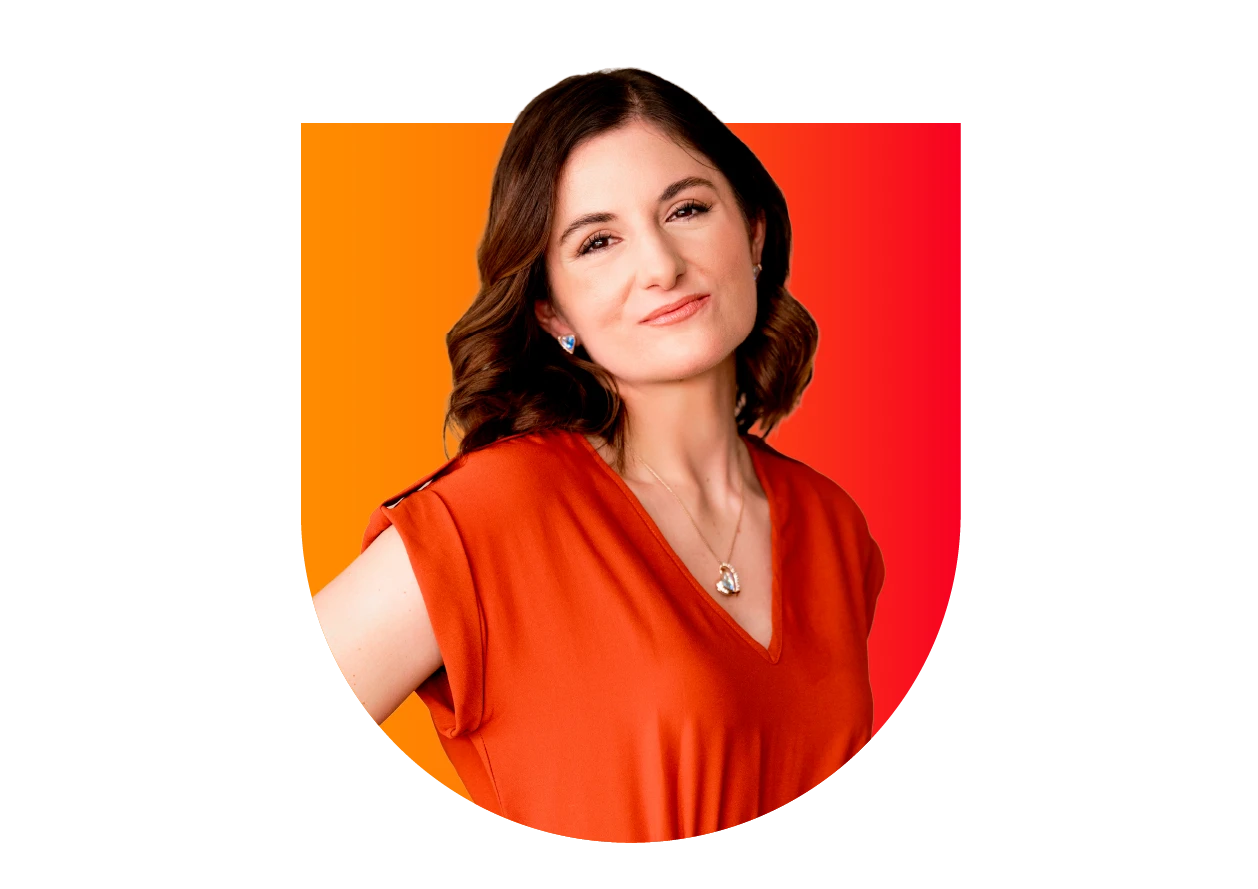
And our guest today is Monika Zvěřinová—a Newton alumna who launched her career at Newton TV and can now be seen on national screens as a TV Nova news reporter. Monika, welcome!
Monika
Hey guys, thanks so much for having me!
Host 1
Monika is living proof that if you pursue something with real drive and passion, you can make it all the way to mainstream television. That’s what today’s episode is all about. Let’s start at the beginning, Moni: you graduated from Newton and got your start right here at Newton TV. What was it like stepping in front of a camera for the first time, and what pulled you into the media world?
Monika
Being back in this studio today brings back an incredible wave of nostalgia. This is the exact room where we shot the very first episodes of Newton Insight—our campus news show for students and faculty. But the studio looks totally different now! I still remember when this wall was just a bare green screen and we had a tiny desk with an old teleprompter rig. Seeing what Newton TV has evolved into today blows me away. I think about those beginnings almost daily at work. Back then it was basically just a creative playground, a bunch of passionate students experimenting. The only seasoned pro among us was Tomáš Hauptvogl, who built the entire news format and station operations from scratch. To answer your question: stepping in front of the camera for the first time was terrifying. Honestly, downright scary. I walked in, and Tomáš along with the camera crew looked at me and said: "Moni, don't freak out, but the camera image always looks rougher than real life. Every lens adds at least ten pounds—but don't worry, you don't look bad." So right away, you're self-conscious about how you look on screen, whether you'll speak clearly, and if people will actually understand you. Fortunately, Tomáš drafted our initial scripts to teach us how to structure information clearly. Having a thought in your head is one thing; delivering it effectively to an audience is the hardest part. As for what fascinated me about media: at Newton TV, it was the thrill of learning a totally new craft—figuring out how to work with cameras and spatial awareness. Since we used a green screen instead of a physical studio set with a desk, I had to be hyper-aware of my framing so I wouldn't step out of shot or miss the mark when pointing to a graphic that would only be keyed in later during post-production. But working as a full-time news reporter in mainstream media is another world entirely. What I love most is the sheer daily variety. You rarely know what your day will look like when you wake up. One day you’re interviewing the president, the next you’re in an operating room filming complex hernia surgery, the day after that you’re in a morgue, and by Friday you’re on a test flight inspecting the main airport runway before it reopens for commercial air traffic. It opens doors you’d never otherwise walk through, gives you unbelievable experiences, and puts you in front of top experts across medicine, economics, and politics. In modern television news—especially at TV Nova—reporters aren't strictly siloed into single beats. We have to be chameleons: you might shoot a healthcare story in the morning and then pivot to explaining complex EU ETS2 carbon allowance policies in the afternoon. That dynamic range is the biggest value of the job and what recharges my battery every single day.
Host 2
During your time at Newton, you hosted live broadcasts for graduation ceremonies, presented at open days and Gaudeamus education fairs, and interviewed acclaimed author Alena Mornštajnová for her book launch. How do you look back on working with the Newton team?
Monika
With immense fondess. It was an incredible team and an amazing learning curve. Of course, the pressure was real. During my first live hit, you’re standing in front of the lens with an earpiece, and the director counts down: "One minute... thirty seconds... ten... you're live!" You stand there wondering: is one person watching, or are there hundreds? You feel a huge responsibility not to mess up the moment for the graduates and their families. But because everyone on the crew was genuinely passionate, it was an absolute joy. We pulled off multiple live crosses across campus throughout the ceremony without a single major on-air disaster. Open days and Gaudeamus fairs were a completely different challenge. On a live broadcast, whatever you say is recorded forever. But in face-to-face conversations with prospective students, you can read their body language in real time and tailor the message directly to them. Delivering information through a camera lens is much trickier because you get zero real-time feedback on whether the audience is following along. In mainstream news, writing a package that is equally clear and engaging to a twelve-year-old kid, a forty-year-old factory worker coming home after a nine-hour shift, and an eighty-year-old grandmother is the ultimate test. At campus open days, when I was presenting to dozens or hundreds of high schoolers alongside faculty, we always tried to turn it into an engaging experience rather than a dry lecture. During my very first presentation at the old Wenceslas Square campus with lecturer Ondra Benda, we wanted to ask the crowd to name Newton’s core values. People were shy, so I said: "Everyone loves candy. Let’s bring a basket of sweets and give a candy to anyone who takes a guess." I told the room that there were no wrong answers—just speaking up earned a reward, because that’s what university and life are all about: taking a shot. Suddenly the whole energy in the room shifted. Students started actively engaging, asking questions, and walking away with an experience, not just pamphlets. That wide range of public speaking gave me an incredible foundation for both my personal and professional life.
Host 2
Whenever I run workshops or lectures for students, I do the exact same thing—using humor, lighthearted banter, and interactive hooks to keep people engaged. Delivering practical insights subtextually pushes them to think critically and read between the lines, which is way more effective than droning over bullet points.
Monika
100%. Newton always taught us that emotion is the strongest carrier of information. Whether the audience leaves laughing, crying, or deep in thought, they have to feel something. If an audience leaves feeling nothing, you failed as a communicator—not them. In television journalism, anyone can read dry facts off a prompter. But making viewers genuinely pause and think, "This affects me, here’s why it matters," is what creates real impact.
Host 2
And with live broadcasting, you’re never going to please everyone anyway. There’s always going to be someone who complains just to be contrarian.
Monika
Oh, absolutely! The amount of angry emails we get is unbelievable. People sitting at home often think: "How hard can it be? You just stand there and talk for sixty seconds. Why are they stumbling?" But they don't see the chaotic environment: pouring rain, screaming crowds, passing traffic, or a producer feeding new updates into your earpiece while you’re speaking. Processing all of that simultaneously while delivering clean sentences live on air is no joke.
Host 2
I remember during a one-week radio internship at Fajn Radio, I won a chance to do a live three-minute weather report. They put headphones on me, fifteen people were watching, and I completely froze. I stuttered, stumbled over basic words, and mixed up the phrasing completely. It felt like an alternate universe.
Monika
That tunnel vision hits hard—your mind goes blank and your heart starts racing. Live hits involving numbers are the absolute worst. If you misplace a figure, your entire mental bandwidth gets hijacked trying to fix it. A colleague of mine was doing a live winter cross from the Krkonoše mountains reporting on heavy snowfall, and for the entire broadcast she accidentally kept saying "sand" instead of "snow." When she finished, the control room chimed in: "Great hit... so are you in the Sahara or the Giant Mountains?" Your brain just misfires under adrenaline!
Host 2
Looking at your other career steps—from HR screening at Grafton to business development at Warengo and project management in healthcare—what did those roles teach you about business and leadership?
Monika
During that period, I was honestly still searching for my direction. I used to envy classmates who had a clear-cut vision: "I'm going to be a doctor, a lawyer, or build a company." I just knew I needed to work with people in a dynamic environment rather than being stuck behind a desk doing accounting. HR prescreening at Grafton taught me how to handle communication under pressure across multiple languages—handling angry callers, confused applicants, or international candidates. That showed me I had a knack for people and sales, which led me to Warengo. The founder reached out to me on LinkedIn after seeing I studied at Newton. Warengo was a unique publishing-meets-social-network platform where articles were visible to the entire user base rather than restricted to personal algorithms. During the COVID lockdowns, traffic exploded to nearly 800,000 monthly visitors. I moved from community management into hardcore B2B ad sales, pitching to major property developers and financial institutions. Unfortunately, an investor dispute abruptly shut the project down almost overnight. After that, I transitioned into healthcare project management for an investment group, working on launching reproductive and allergy clinics. I managed a small team of five, running everything from mystery shopping at competitor clinics to detailed financial modeling and procurement costs. But right before that wrapped, an opportunity came along that I simply couldn't refuse: I opened my own cafe at Český Šternberk Castle.
Host 2
That was such a memorable chapter—you ran the castle cafe for two years with amazing coffee and incredible pastries.
Monika
It was a fantastic time, but a massive responsibility. Suddenly I was employing twenty to twenty-five seasonal staff. It’s a seasonal operation running from April to October, so you have to work hard to build a positive culture so your core team returns year after year. Our team ranged from sixteen-year-old high schoolers to women my mother’s age. Managing that dynamic—maintaining authority without making anyone feel micromanaged, while keeping our profit margins healthy—was a masterclass in operations and leadership.
Host 2
You even hired a close friend of yours, right?
Monika
I did, and we’d been close friends for eight years. A situation came up where he made a mistake on shift. I had to step up as his boss rather than his friend and tell him that his approach wasn't acceptable. He initially got defensive and tried to brush it off, saying he wouldn't discuss it with me. I had to set clear boundaries on the spot: "You will discuss this with me, because right now I’m your manager and we cannot run things this way." He gave a curt response and walked off, so I called him back and insisted on professional acknowledgment. He was cold for a week, but I made a point of sitting down with him daily to explain: "On the clock, I am your employer and you are an employee. The moment we lock these doors, we're friends—we can grab a beer, hang out, go on vacation. But do not blur those lines during service." Mixing friendship and business is incredibly tough, but setting clear boundaries saved both the business and our friendship.
Host 2
You call it a "small cafe," but managing twenty-five staff is a significant operation!
Monika
I probably call it small because I compare it to my parents’ restaurant right below the castle, which had sixty employees and seated two hundred guests. It was the main dining spot in town, so paddlers, cyclists, and castle tourists packed it out constantly. During peak lunch rush, we’d have lines of people hovering over seated diners waiting for tables. Compared to that non-stop machine, running the boutique cafe felt like a breeze!
Host 2
And then came the major turning point: TV Barrandov and TV Nova.
Monika
I never saw it coming. Newton TV was a fun student project to me; I never imagined presenting national news. But mentors like Tomáš Hauptvogl saw potential in how I synthesized information and pushed me to audition. When Jaromír Soukup left TV Barrandov and the network had to assemble a fresh newsroom immediately, Tomáš told me to shoot a mock live hit on my phone covering the Metro C line closures. I submitted it, and within forty-eight hours, Barrandov called asking when I could start. I began doing street reporting across Prague. Shortly after, an opening came up at TV Nova for TN Live, which quickly led to an offer to join the main national domestic news desk. It was intimidating stepping into Televizní noviny at 7:30 PM, but it’s been an incredible masterclass. Covering complex breaking stories—like financial fraud investigations within my first few weeks—pushed me right into the deep end.
Host 2
Could you give our audience a live demo of how you’d open our podcast if it were a breaking news live hit?
Monika
Haha, challenge accepted! Let’s treat it like a live cross. Picture the director in my ear counting down: "Ten seconds to air..."
"Good evening. I’m reporting live from the Newton TV studios alongside František Zevík and Honza, the creators behind the new podcast 'Two on One.' Good evening, gentlemen."
Monika Zvěřinová, TV Nova.
Host 2
Masterclass! We have a lot to learn from you. Moni, to wrap up: with such a demanding schedule, how do you recharge and maintain a personal life?
Monika
Our newsroom operates on a shift system—working intense blocks of days followed by full weeks off. During working weeks, life outside work basically doesn't exist; I’m on the road, researching pitches late into the evening, and commuting 70 kilometers each way. But during off-weeks, I completely disconnect through travel. I leave my work laptop at home, put my personal phone on airplane mode, and explore new cities without a rigid schedule.
Host 2
What advice or motto would you leave with our listeners aspiring to reach their goals?
Monika
Above all, choose a career that genuinely fulfills you. I always remember a question mental coach Marián Jelínek asked me during my time at Newton: "Moni, do you like money, or do you like MAKING money?" There’s a massive difference. Strive for a path where you love the daily hustle and craft required to earn that living. And to borrow Karel Čapek’s timeless advice: "A person should strive to know everything about something, and something about everything." Stay endlessly curious, listen actively to others, and always apply critical thinking to the world around you.
Host 2
Monika, thank you so much for joining us. You’re a huge inspiration to our community.
Monika
Thank you so much for having me, guys! It was an absolute pleasure.
Host 2
Thanks to Newton University and Newton TV for providing our recording space. Make sure to follow and subscribe on YouTube and Spotify, and we’ll catch you next time on Two on One. Bye!