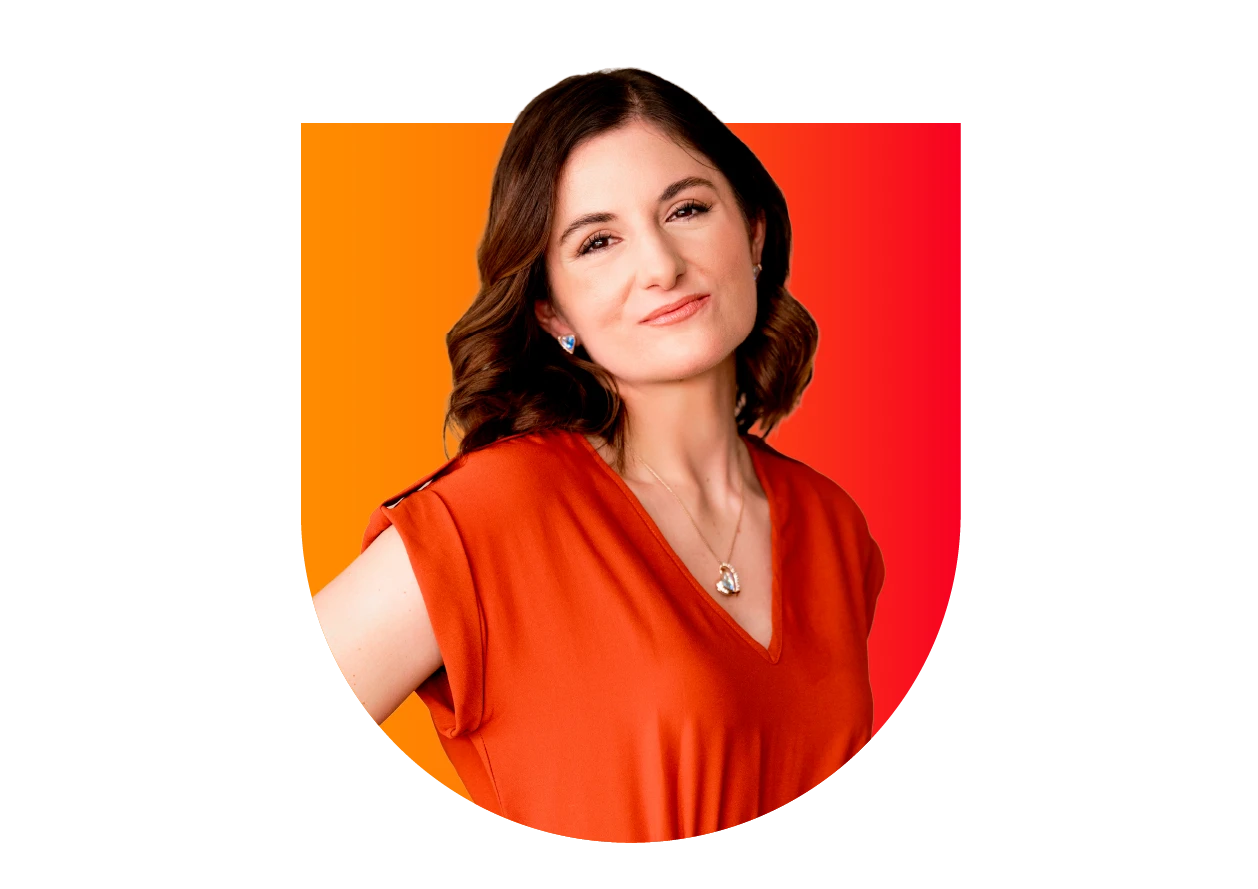
Host 1
Welcome to the Two on One podcast. I’m František, and sitting next to me is Honza. On this show, we chat with inspiring students and alumni from Newton University.
Host 2
And our guest today is Tomáš Jedlička—an actor, presenter, and TV reporter. Tom, welcome!
Tomáš
Hey guys, thanks so much for having me.
Host 1
Tomáš has had a fascinating journey bridging theater, music, and television. Today, we’re going to dive right into it. Let’s start at the very beginning, Tom: what was your childhood like, and what was it like stepping onto a theater stage at just six years old?
Tomáš
Well, getting into theater was actually pure coincidence. I have an older brother—twelve years older than me—who was acting at Divadlo Jesličky in Hradec Králové. One day he had rehearsal and there was no one at home to babysit me. They were rehearsing a pretty dark, almost horror-like production about depression and a girl dealing with a wicked stepmother. My brother dragged me along to keep an eye on me, and the director immediately went: "Actually, we could really use a young kid in this scene—let's put you in!" So I started acting on stage before I’d even enrolled in the drama classes at the local arts school. That essentially kicked off the whole journey leading up to today.
Host 2
And around the same time, you picked up classical guitar. Where did your musical talent come from, and how did your connection to the guitar start? I see you’ve got long fingers—perfect reach for the fretboard.
Tomáš
The guitar followed almost the exact same path. My brother played classical guitar, competed in contests, and played in a classical guitar orchestra. I was mesmerized by that, because guitar isn't the first instrument people imagine in an orchestral setting.
Host 2
Not at all.
Tomáš
Right—you don't usually picture guitars playing Bach or Vivaldi. But I loved it. As soon as my brother went off to college and didn't have time to practice as much, I took his spot with the same teacher. Later on, I played in duos, quartets, and traveled for competitions. I had a blast, mainly because of the community. That’s the exact same reason I loved theater: for me, it's always been all about the people.
Host 1
So your brother was your primary inspiration?
Tomáš
Massively. We've always had an incredible relationship, and I’m super grateful for that. Growing up, I didn’t even question whether I’d do theater or play guitar—it just felt natural. At first, I thought guitar would be my main career path and theater would stay on the side. But as I got older, I realized acting pulled me in way more. Later, when I got into reporting and media, that passion for public speaking, vocal work, stage presence, and embodying different characters took over. Exploring different personas is endlessly fascinating to me. That’s when my focus shifted toward theater, though my brother was definitely the initial spark.
Host 1
What fascinates you so much about the stage? You keep coming back to theater—what makes it such a distinct world for you?
Tomáš
It really is a completely different universe. On stage, you have license to step into someone else’s shoes entirely. Personally, I much prefer live theater to prerecorded screen work. I did a few commercials when I was a kid, but live theater is far more rewarding because of that real-time dialogue with the audience. When you're on stage, you aren't performing for yourself or for a cold camera lens that gives zero emotional feedback. A camera won't laugh, get angry, boo, or react. But a live audience does. You feel their energy instantly. Plus, whatever happens on stage is final—there are no do-overs. On a film set, if a take goes wrong, you just shoot it again (unless you’re doing live breaking news). In theater, whatever happens in that room is shared with the audience in that exact moment.
Host 1
Whenever I talk to actors, they almost always say they prefer the stage over film sets, which surprised me at first because I assumed film was more prestigious. But as you said, film sets involve endless waiting, whereas theater gives you that immediate connection with the crowd.
Host 2
Have you ever faced negative reactions or pushback from an audience during a live show?
Tomáš
Oh, absolutely.
Host 2
Directed at you personally, or the production?
Tomáš
At me, at the play, at the entire concept. You see it a lot at competitive theater festivals. In music competitions, you can objectively evaluate technical precision. In theater, it’s much more subjective. You can assess an actor's craft, but judging the interpretation of a play is tricky—everyone views a story through their own lens. At these drama festivals, without meaning any disrespect, festival juries are often made up of regional theater veterans who fall into a rigid "critic mindset." They feel obligated to find flaws, as if approving a performance without tearing something apart means they didn't do their job. Sometimes it feels like people projecting their own artistic insecurities. The feedback can get pretty sharp. Aside from that, I perform with an ensemble in Hradec called Divadlo Lůza ("The Rabble Theater"). As the name suggests, our style is pretty unconventional—we lean heavily into cringe comedy and awkward humor. When it works, it’s brilliant. I love performing it now, even though stepping into that style felt wildly uncomfortable at first. But not every audience member walks in expecting that kind of humor, so it definitely rubs some people the wrong way.
Host 1
And you’re still with that ensemble today?
Tomáš
Yeah, absolutely.
Host 1
And what about Jesličky?
Tomáš
Still there as well! Divadlo Lůza was formed mostly by alumni from Jesličky, so I stay active in both.
Host 1
Have established actors from Prague ever come out to scout your shows? Mainstream directors and actors often scout talent in regional theaters.
Tomáš
Well, Miloň Čepelka from the Jára Cimrman Theater comes to see us occasionally, but that’s mostly family—his granddaughter performs in our troupe! Beyond that, Jesličky operates under the Střezina Arts School in Hradec Králové. It’s named after its first artistic director, Josef Tejkla. It runs youth programs from kindergarten age up through high school, but it also has adult ensembles for people who have day jobs but want to keep acting at a high level. Divadlo Lůza is an independent offshoot founded by Mirek Vrbický, who’s currently the managing director at Divadlo VILA Štvanice in Prague. It operates on a more professional level. Personally, I’ve never liked drawing hard lines between "professional," "non-professional," or calling people "amateur actors." The term "amateur" often carries this outdated connotation of a sleepy village troupe rehearsing once a year for the local harvest festival.
Host 2
Like calling someone a "beer-league hobbyist" in hockey.
Tomáš
Exactly!
Host 1
Who were your acting idols growing up? Who did you look up to in the Czech scene?
Tomáš
Man, Czech acting icons... I’ve always had immense respect for Ivan Trojan and Zdeněk Svěrák.
Host 2
True masters of the craft.
Tomáš
Absolute legends of Czech cinema and theater. I can’t imagine our cultural scene without them.
Host 1
Couldn’t agree more.
Host 2
Let’s jump back to music: you spent two years teaching classical guitar at an arts school. What was it like being on the other side of the classroom as a teacher?
Tomáš
Exhausting! It gave me a massive reality check about everything I used to pull as a kid. When I was younger, I constantly skipped practice to play video games or hang out with friends. Suddenly, I was the one standing there pleading: "Guys, you have to practice! Look, Domča, the recital is next week and you still don't know this passage. You have to memorize it—you won't have sheet music on stage." You suddenly realize your old music teacher was right all along. What surprised me most was catching myself mimicking the exact same teaching habits and phrases my old instructor used on me. It happens subconsciously. But I genuinely love working with kids; it was a great experience. I miss it sometimes, but I knew teaching wasn't the ultimate career path I wanted to pursue.
Host 1
So pedagogy isn’t for you long-term.
Tomáš
Not really. Both of my parents are certified teachers—my dad is currently a school principal, so he mostly just substitutes when needed. But that teaching gene didn't really get passed down to me.
Host 1
Tell us about the theater debate project you ran.
Tomáš
That was the Kitchen Table project, created as part of the Regiony International Theatre Festival in Hradec Králové—one of the biggest annual cultural events in the city. It came together organically. A group of us from Jesličky had been acting together for years when a Norwegian theater troupe called NIE came to town. A producer named Anna Möberg was looking for teenagers—roughly 12 to 17 years old—to lead post-show discussions. The core philosophy of Kitchen Table was bringing together young people who love theater but haven't studied it academically to debate what they just saw. The point was proving that you don't need a drama degree to have a valid opinion on a show. When you watch a play, it triggers an emotional response regardless of your theoretical background. If a scene doesn't resonate or feels confusing, why is that? Did you lack context, or was the dramaturgical execution flawed? The first year I participated as a panelist; the following year, the Norwegian team wasn't there, so someone had to host. The group democratically picked me to moderate. We got incredible backing from Divadlo Drak, another major venue in Hradec. They loved the concept so much they asked us to run debates during their regular season shows too. We've been running them for about a year and a half now with great production support from Jana Nechvátalová.
Host 1
Your passion for theater is obvious. But now let’s pivot to your screen work: from stage acting to reporting for TV Barrandov and shooting for TV Nova. How demanding is on-camera reporting? For all our previous podcast episodes, you were sitting right next door in the control room; today you’re on the other side of the mic. How does it feel?
Tomáš
Sitting in front of the camera on this set definitely feels weird! Usually, David Zevík and I are the ones setting up the lighting, testing audio, and running all these cameras. My transition to TV Barrandov and TV Nova started right here at Newton TV, where I still work.
Host 1
How long have you been here?
Tomáš
Going on three years now. During the second week of my freshman year, I walked in for an interview wanting to be an on-air reporter. I had stage experience and knew how to speak publicly, but I knew absolute zero about technical production. I had no clue how to set up a camera, edit video, or route HDMI cables through a switcher. I learned everything on the fly. The opportunity at TV Barrandov came through Tomáš Hauptvogl, who helped launch Newton TV. When TV Barrandov went through an ownership overhaul and Soukup left, they had to build an entirely new newsroom overnight because Soukup had basically been running the news himself. They urgently needed field reporters. Tomáš Hauptvogl recommended Monika Zvěřinová and me, and we jumped at the chance. It was intense. Looking back, it was a fascinating year. When I started university, I never imagined that within eighteen months I’d be on national television every week, sometimes every two or three days. It was a massive opportunity, though you could tell things were being slapped together on the fly. Toward the end, budget cuts hit the newsroom hard, making daily operations tough. When we left after a year, it wasn’t our call—the network simply restructured its format to focus purely on in-studio broadcasts, eliminating roving field reporters. I served as their Prague field correspondent—occasionally covering Hradec Králové too.
Host 1
How did you transition from TV Barrandov to TV Nova?
Tomáš
That was also through Tomáš Hauptvogl, who was collaborating with Kolo pro život (a major national mountain bike race series). David was already shooting there, and they brought me on board. I started as an on-course reporter, and by the next few events, I was operating a camera as well. That made up the bulk of my work for TV Nova. It was such an entertaining gig. I had a rough script outlining mandatory sponsor mentions—since both TV Nova and the race series have corporate partners that need screen time—mixed with vox pops interviewing riders and organizers. Interviewing cyclists at the finish line is hilarious. These athletes finish grueling, mud-soaked endurance races, and you shove a microphone in their face: "Hi there! How was the ride?" They just stare at you, gasping for air: "Yeah... lots of mud... that hill was brutal..." And you have to turn that into an upbeat broadcast package. The absolute best part was interviewing the kids' categories. You’ve got these intensely supportive parents on the sidelines screaming, "Go, Pepa, pedal!" Then little Pepa crosses the finish line completely wiped out, on the verge of tears, and the dad pushes him forward: "Go on, Pepa, talk to the TV guy!" You ask, "Pepa, how was the track? Any tough spots?" And the kid just stares blankly: "...Good."
Host 1
I remember that segment—pure gold!
Tomáš
It was hilarious. Operating in the field was wild too, with bikes flying past you at full speed. Standing on the final sprint straightaway with riders barreling toward you at thirty miles an hour is intense. But the most brutal race of all? The under-two toddler balance bike sprint! Thirty toddlers frantically pushing their bikes down a track at once—the only way to film it was sprinting alongside them with a handheld camera.
Host 1
Coming back to Newton TV: what do you enjoy most about working here, and what keeps you fulfilled?
Tomáš
Honestly, every aspect of it. When I started, I was strictly an on-air reporter because speaking was the only skill I had. I knew how to write a script and structure a story, but that was it. Working here forced me to master camera operations, mirrorless camera rigs, and editing workflows. It’s been an incredible education with endless room for growth. I started as a part-time student worker covering campus events; before I knew it, I transitioned into a nearly full-time role. Even though my course load in my senior year is lighter, I spend more time in this studio than ever. David is a fantastic team lead, our studio setup is top-notch, and our production gear for podcasts and live conference coverage is professional-grade. The scope of projects we handle here is immense.
Host 2
To wrap things up: what advice would you give to anyone looking to break into theater or creative media?
Tomáš
Above all, stay authentic to who you are. Focus on the specific aspect of the craft that genuinely excites you, and obsess over refining it. In fields like theater or television, you’ll constantly run into opinionated people eager to criticize your work. You have to stay grounded and confident in what you’re putting out. Listen to constructive feedback, absorb what helps you grow, but keep enough emotional distance so criticism doesn't crush you. If you let every critique get to you, you’ll never move forward.
Host 1
What’s your parting motto?
Tomáš
It’s better to screw things up on your own terms than follow someone else’s bad advice.
Host 1
That's a wrap on our time today. Thank you so much for joining us, Tom, and sharing your journey. It was an inspiring and genuinely fun conversation.
Tomáš
Thanks a ton for having me, guys. It was a pleasure!
Host 2
Huge thanks, Tom. Now we'll send you right back behind the switcher!
Host 1
Special thanks to Newton University and Newton TV for providing the studio and support to make these podcasts happen.
Host 2
Make sure to follow us across all platforms—YouTube, Spotify, and TikTok. See you next time on Two on One. Bye!